
With the introduction of the Corporate Sustainability Reporting Directive (CSRD), organizations now face more rigorous standards for sustainability reporting. A key component is the European Sustainability Reporting Standards (ESRS) S1, which focuses on the impacts, risks, and opportunities related to an organization’s Own Workforce.
Studies show a positive correlation between robust workforce management practices and enhanced business performance:
- 70% of pioneers (leaders who view workforce risk factors more holistically and spread responsibility for effectively measuring and managing) reported outperforming their competitors in core business outcomes such as profitability, brand recognition, and operational efficiency (Deloitte)
- Companies with strong employee engagement and development programs have observed 18% lower turnover compared to counterparts without these programs (Gallup)
- Companies with mature DEI programs and high levels of DEI alignment with business strategy (“Leaders”) found that their efforts positively impacted agility/innovativeness (63%), brand perception (68%), and recruitment and retention (64%) (TechTarget)
In addition to improving outcomes, clearly outlined programs and practices can help facilitate reporting and compliance efforts.
Understanding the Essentials of ESRS S1
ESRS S1 is a comprehensive standard specifying disclosure requirements that enable users of sustainability reports to understand an organization’s material positive and negative actual or potential impacts on its workforce. This includes related material risks and opportunities. Companies need to conduct a double materiality assessment to identify the significant impacts it has on people, society, and the planet as well as the cash flow and value creation associated with them.
In general, ESRS S1 disclosures encompass how the organization’s operations and dependencies affect its workforce, actions taken to manage these impacts, and the financial effects of short-, medium- and long-term risks and opportunities. When preparing for ESRS S1 reporting, organizations should reflect on several crucial questions to ensure comprehensive and compliant disclosures.
- What targets have we set for managing workforce-related impacts, and how do we measure progress?
- How do our workforce’s interests, views, and rights inform our strategy and business model?
- How do our operations impact our workforce, both positively and negatively?
- What policies have we implemented to manage these impacts effectively?
- How do we engage with our workforce to understand and address their concerns?
- What are the material risks related to our workforce, and how are we managing them?
- What opportunities are we pursuing to enhance workforce well-being and productivity?
ESRS S1: The Numbers
Here is a detailed breakdown of ESRS S1, categorizing and quantifying workforce management, safety protocols, risks and opportunities, and diversity data points to enhance corporate transparency and accountability.
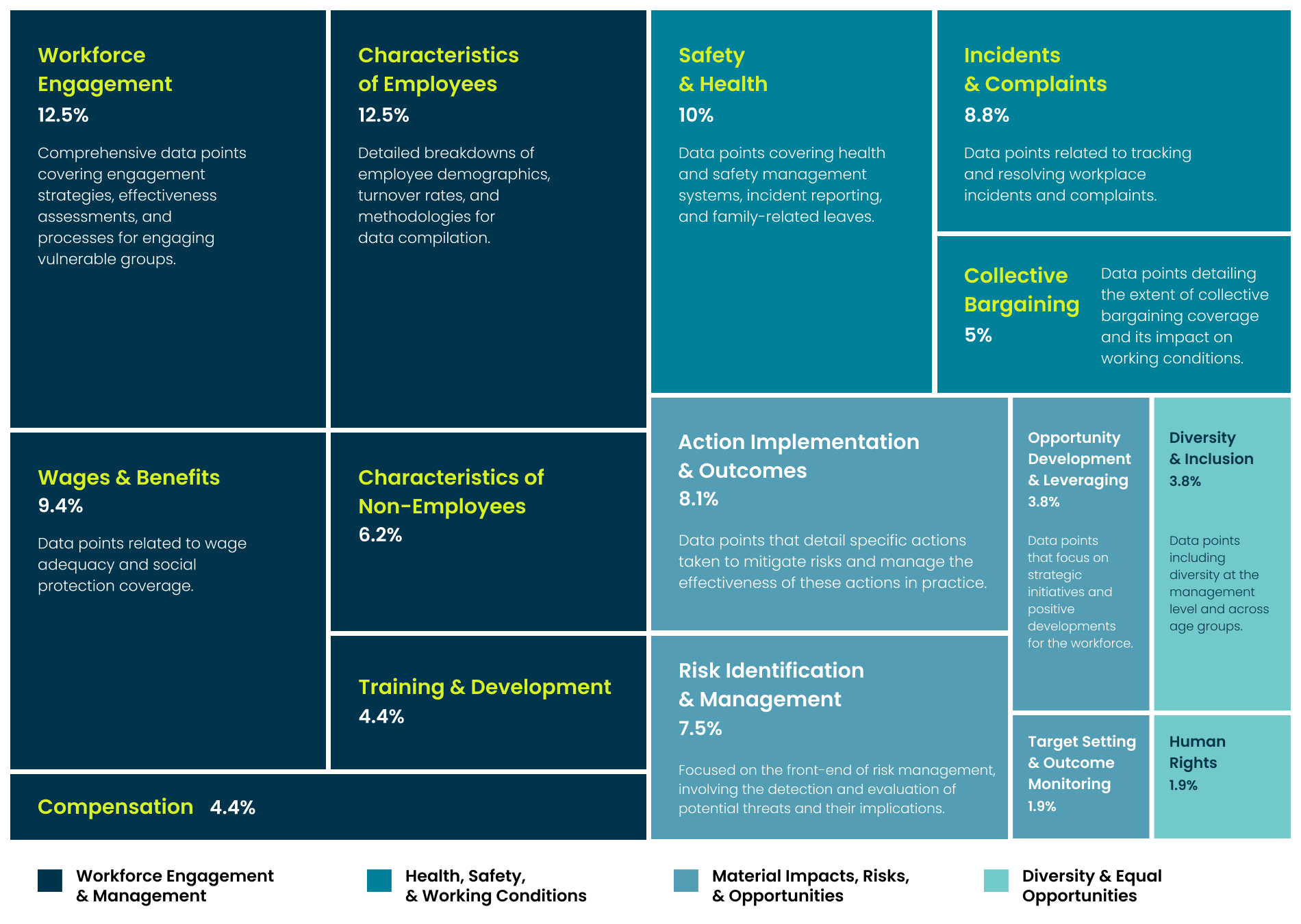
- Workforce Engagement and Management (49.4%)
- Workforce Engagement (12.5%): Data points covering engagement strategies, effectiveness assessments, and processes for engaging vulnerable groups.
- Training and Development (4.4%): Data points related to training hours, performance reviews, career development, and non-employee participation in training.
- Compensation Metrics (4.4%): Data points related to pay gaps, total compensation, and remuneration ratios.
- Characteristics of Employees (12.5%): Detailed breakdowns of employee demographics, turnover rates, and methodologies for data compilation.
- Characteristics of Non-Employees (6.3%): Data points on non-employee demographics and methodologies for data compilation.
- Wages and Benefits (9.4%): Data points related to wage adequacy and social protection coverage.
- Health, Safety, and Working Conditions (23.8%)
- Safety and Health (10%): Data points covering health and safety management systems, incident reporting, and family-related leaves.
- Incidents and Complaints (8.8%): Data points related to tracking and resolving workplace incidents and complaints.
- Collective Bargaining (5%): Data points detailing the extent of collective bargaining coverage and its impact on working conditions.
- Material Impacts, Risks, and Opportunities (21.3%)
- Risk Identification and Management (7.5%): Focused on the front-end of risk management, involving the detection and evaluation of potential threats and their implications.
- Opportunity Development and Leveraging (3.8%): Data points that focus on strategic initiatives and positive developments for the workforce.
- Action Implementation and Outcomes (8.1%): Data points that detail specific actions taken to mitigate risks and manage the effectiveness of these actions in practice.
- Target Setting and Outcome Monitoring (1.9%): Focusing on how targets related to material impacts and opportunities are set, monitored, and standardized.
- Diversity and Equal Opportunities (5.6%)
- Diversity and Inclusion (3.8%): Data points including diversity at the management level and across age groups.
- Human Rights (1.9%): Data points related to human rights adherence, particularly focusing on persons with disabilities and other vulnerable groups.
Leveraging Existing Frameworks for a Smoother Transition
CoWhen integrating ESRS S1 standards, companies can benefit from leveraging existing frameworks that offer robust guidelines that align with ESRS S1 to reduce the reporting burden. A significant development from the cooperation between GRI and EFRAG, the standard-setting body for the CSRD, is the GRI-ESRS Interoperability Index. This tool illustrates how the disclosure requirements and data points in each set of standards relate to each other, highlighting the high degree of commonality already achieved. Therefore, entities reporting under ESRS will be deemed reporting ‘with reference’ to the GRI standards, allowing existing GRI reporters to leverage their current reporting efforts to prepare their ESRS Sustainability statement. Specifically, GRI 401 to 409 are relevant guidelines that match with ESRS S1.
The ISSB, the European Commission services, and EFRAG, have also collaborated to align ESRS and IFRS Sustainability Disclosure Standards (ESRS-ISSB Standards Interoperability Guide), particularly focusing on climate-related reporting. This alignment includes a common definition of financial materiality, shared terminology, and a high degree of alignment in climate-related disclosures. This joint interoperability ensures that entities can comply with both sets of standards through a unified approach, streamlining the reporting process and minimizing duplication.
How Novata Can Help
Understanding and implementing ESRS S1 is crucial for organizations aiming to enhance their sustainability reporting. By considering the key questions, leveraging existing frameworks, and highlighting important data points, companies can ensure a comprehensive and transparent approach to workforce-related sustainability issues. This not only helps in complying with regulatory requirements but also builds trust with stakeholders and enhances the organization’s reputation. Novata offers a suite of over 100 data points focusing on S1. Plus, our expert services, and leading ESG data management platform help remove operational burdens and uncertainties associated with the CSRD and positions companies to report successfully.